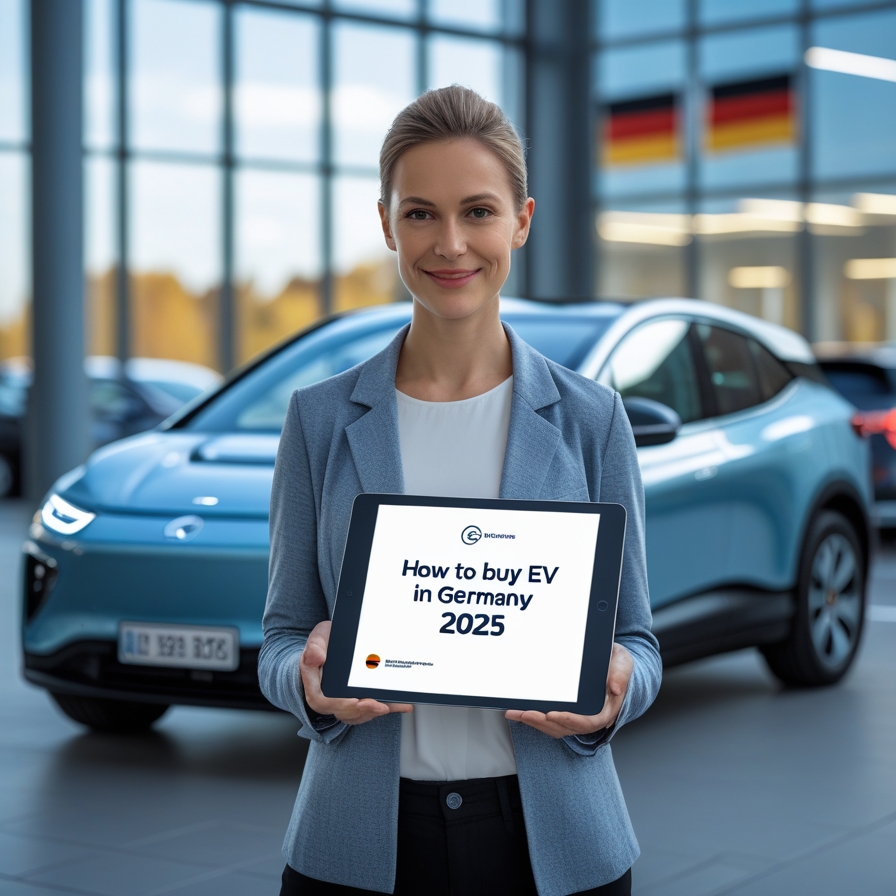
The Comprehensive European EV Financing Guide 2025

The European EV financing guide 2025 helps buyers navigate tax perks, loans, and residual values.
The Comprehensive European EV Financing Guide 2025
Purchasing an Electric Vehicle (EV) in Europe today is not just a lifestyle choice; it is a complex financial investment decision unlike anything seen in the last two decades of combustion engine sales. The rules are changing yearly, driven by aggressive EU-wide emission targets and local government subsidies. Navigating these shifts requires a clear and structured resource — and that is where this European EV financing guide 2025 comes in. It provides high-net-worth individuals and business owners with the analytical framework needed to minimize Total Cost of Ownership (TCO) and select the most fiscally advantageous path to EV ownership.
Understanding the Key Financing Options for Electric Vehicles in Europe
Traditional Bank Loans vs. Manufacturer Financing
In 2025, options in the European EV financing guide 2025 context are primarily split between traditional lenders and the manufacturers themselves. Traditional banks often offer competitive APRs for well-qualified borrowers, while manufacturer finance arms (e.g., BMW Financial Services, Mercedes-Benz Mobility) provide balloon-payment structures and guaranteed-buyback programs that reduce residual-value exposure.
The Rise of EV Leasing (Operational vs. Financial)
For businesses and high-mileage drivers, leasing remains superior. Operational leasing transfers depreciation risk to the lessor, while financial leasing enables depreciation/tax treatment depending on local rules. As highlighted in this European EV financing guide 2025, the correct choice depends on balance-sheet strategy, tax environment, and risk tolerance.
FinTech and Digital Lending Platforms
FinTech lenders now dominate cross-border comparison services, giving buyers instant access to multiple APRs and fee structures. This digitization, emphasized in every European EV financing guide 2025, helps borrowers stress-test different loan structures before committing.
Maximizing Your Savings — EV Tax Advantages and Subsidies
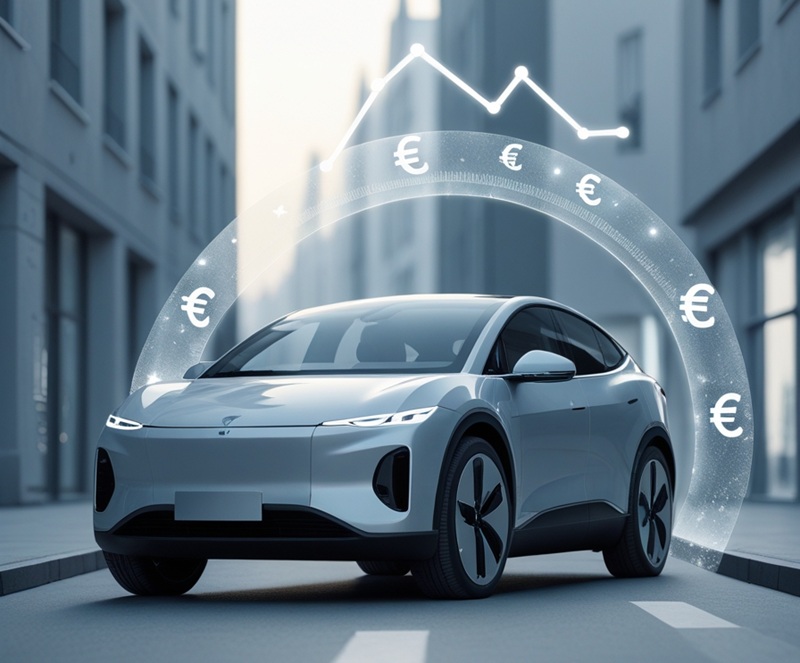
Government programs remain central to EV affordability. This European EV financing guide 2025 stresses that incentives change rapidly:
Germany: Federal Umweltbonus has been wound down, though new depreciation-based tax incentives are being considered.
France: Reformed bonus écologique provides €3,100–€4,200 depending on income thresholds.
Italy: Subsidies up to €10,000 when linked with scrappage schemes.
Advanced EV Loan Comparisons
When comparing EV loans, a simple APR check is insufficient. The European EV financing guide 2025 highlights that total repayment, balloon structures, and residual-value assumptions must all be integrated into the decision-making model. Soft pre-qualification with FinTech platforms provides buyers with leverage in negotiations.
Mitigating Risk — Understanding Residual Value
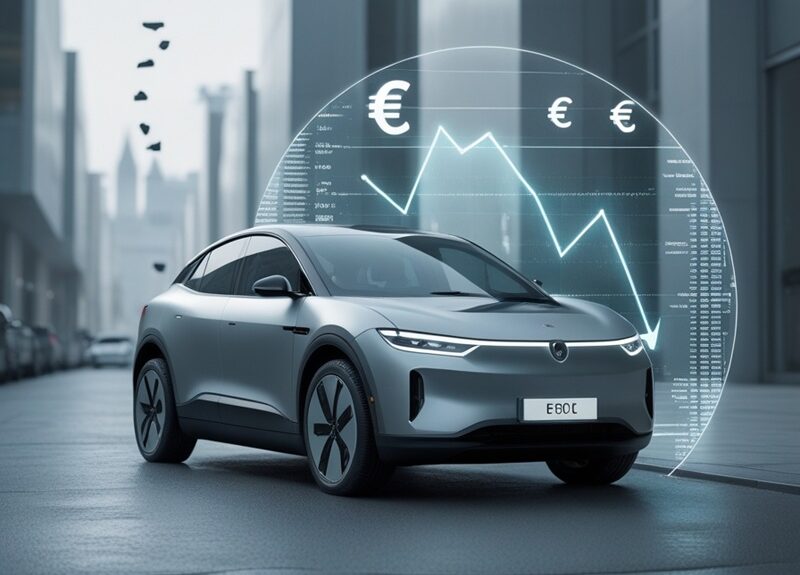
Residual Value (RV) is volatile in 2025. According to Autovista24, average RVs in Europe are expected to fall by 4.2% by the end of the year. As emphasized throughout this European EV financing guide 2025, depreciation risk varies across markets, brands, and battery technologies — making it one of the most critical financial factors for both leasing and ownership.
Your Action Plan for European EV Financing Success
Mastering European EV financing requires diligence, but the rewards are substantial. By maximizing tax/subsidy advantages, conducting thorough EV loan comparisons, and managing residual-value risk, buyers can significantly reduce their TCO. This European EV financing guide 2025 concludes that disciplined modeling, live APR comparisons, and constant tracking of national incentives are essential for EV buyers in Europe.
Future Trends in European EV Financing (2025–2030)
While 2025 marks a turning point, the next five years will determine whether EV financing in Europe stabilizes or becomes even more fragmented. Several megatrends will shape the financing landscape:
Green Bonds and Sustainable Finance Integration
Institutional investors are increasingly channeling capital into green bonds that support EV adoption. By 2027, the European Central Bank may tie lower capital requirements for banks to green asset exposure, indirectly making EV loans cheaper. This shift could further reduce interest rates for borrowers who finance EV purchases under sustainable finance labels.
Battery-as-a-Service (BaaS) Financing
Companies like NIO and Renault are piloting models where the vehicle is purchased separately from the battery. In this system, buyers pay a monthly fee for the battery, which removes the single largest depreciation risk from the ownership equation. For high-net-worth individuals, this opens up a portfolio approach: the car itself is a depreciating asset, while the battery becomes a manageable subscription expense.
Cross-Border Harmonization Challenges
The European Union aspires to harmonize incentives and financing rules across member states, but political realities slow progress. Between 2025 and 2030, financing conditions may remain highly fragmented — a theme highlighted in every European EV financing guide 2025. Buyers in Germany and France will still face different depreciation rules, VAT treatments, and subsidy systems.
Digital Transformation of EV Lending
AI-powered credit scoring and instant cross-border approvals will dominate by 2028. Instead of lengthy paper-based applications, buyers will receive near-real-time financing offers, integrated directly into dealership platforms.
Strategic Recommendations for Investors and Businesses
For businesses and wealthy individuals, EV financing decisions should not be tactical but strategic. The following principles are critical:
Optimize Tax Timing
Leverage depreciation allowances where they are front-loaded (e.g., Italy, Netherlands) by structuring purchases at the start of a fiscal year. Conversely, where subsidies phase out (e.g., Germany), act before cut-off deadlines.
Hedge Against Residual Value Risk
Consider leasing or BaaS models when market conditions suggest sharp depreciation, especially for early-generation EVs with uncertain battery durability.
Build Financing Flexibility Into Corporate Fleets
Corporations should avoid locking into fixed structures. Flexible leases with mileage adjustments or early termination options reduce exposure to unpredictable policy changes.
Align Financing with ESG Targets
For investors subject to Environmental, Social, and Governance (ESG) reporting, EV financing choices can support corporate sustainability metrics, enhancing reputational and compliance value.
EXECUTIVE SUMMARY: The European EV Financing Playbook
The European EV financing market in 2025 is both an opportunity and a risk. High-net-worth individuals and businesses face a fragmented landscape of tax rules, residual-value uncertainty, and fast-evolving financing models. However, with structured analysis, buyers can:
- Exploit national subsidies and tax breaks before they are phased out.
- Compare cross-border financing options using digital platforms.
- Mitigate depreciation risk through leasing or BaaS models.
- Align investments with sustainability goals to unlock reputational and financial benefits.
In conclusion, this expanded European EV financing guide 2025 demonstrates that the right financial strategy can lower Total Cost of Ownership by double-digit percentages. Success depends not only on choosing the right car — but on mastering the financing structure that underpins it.
Click to follow our Instagram page: Vidyoto