
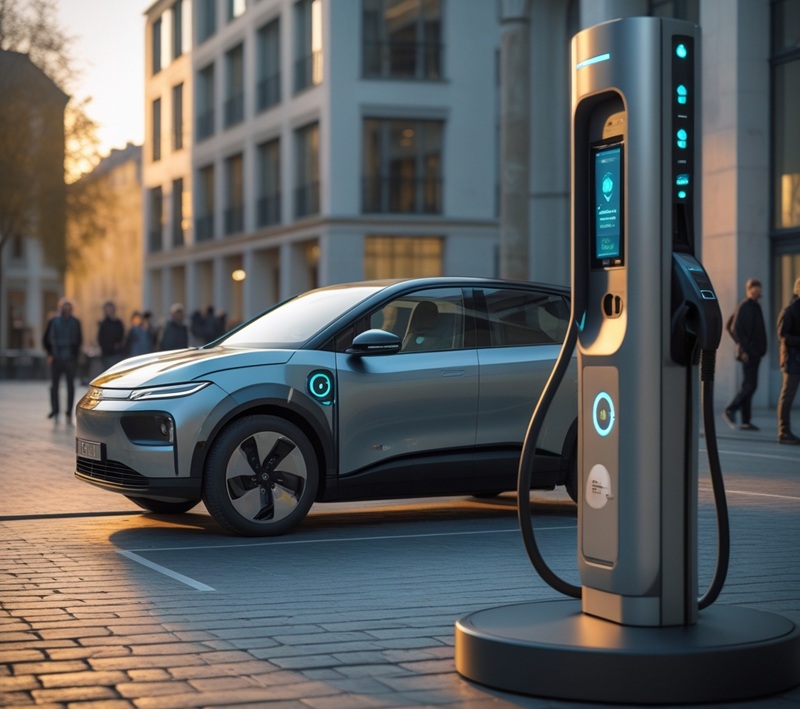
European EV Charging Infrastructure Boom

Europe’s 2025 push in EV Charging Infrastructure turns regulatory requirements into a major growth opportunity.
European EV Charging Infrastructure Boom
Europe’s ambitious drive toward sustainable mobility has reached a pivotal moment. The Alternative Fuels Infrastructure Regulation (AFIR) and substantial EU funding packages—including a €422 million allocation under the Connecting Europe Facility (CEF)—are creating unprecedented investment opportunities for electric vehicle (EV) charging infrastructure across the continent. Industry experts now widely agree that what was once a regulatory obligation has rapidly evolved into a dynamic and highly profitable growth sector for private investors and charging point operators (CPOs).
Rapid Growth Driven by Regulatory Certainty
Latest reports from the European Commission indicate that AFIR’s initial 18 months of implementation have already driven a 30% increase in public charging points, particularly along the Trans-European Transport Network (TEN-T), exceeding early projections. This accelerated growth underscores the private sector’s eagerness to invest and signals a significant shift in market dynamics.
AFIR, effective April 13, 2024, establishes binding minimum targets for public EV charging infrastructure in all EU member states. In 2025, further implementing regulations reinforced technical and usability standards, mandating data transparency and interoperability compliance. These measures have brought predictability to infrastructure deployment, making projects significantly more investment-ready. Notably, these regulations have fast-tracked the adoption of “Plug & Charge” technology, enhancing user experience; by Q3 2025, over 60% of newly installed public charging points in the EU fully comply with the ISO 15118 standard.
Experts highlight that this regulatory certainty, combined with EU grant programs such as CEF, InvestEU, and NextGenerationEU, allows private investors to leverage public funds effectively. This approach mitigates policy risk while unlocking crucial growth capital for EV projects across Europe.
EU Grants Fuel Infrastructure Expansion
The EU’s 2025 funding allocations include approximately €422 million for CEF projects, targeting alternative fuels infrastructure along the TEN-T. These grants support rapid deployment of public EV charging stations, complement national infrastructure plans, and enhance bankability for both public and private investors.
In total, 134 transport projects received over €7 billion in EU support under the 2025 CEF Transport program. These initiatives are pivotal in expanding zero-emission mobility infrastructure, particularly in underserved regions, and achieving the EU’s 2030 target of 3.5 million public charging points. Recent Commission reports confirm that CEF funding has increased charging point density by 40% in Eastern and Southeastern Europe, addressing regional disparities in EV access.
Private Capital Surges into the Market
Private equity and infrastructure funds increasingly view EV charging as a high-return sector. Throughout 2024–2025, major PE and infrastructure funds have committed substantial resources to European EV Charging Infrastructure projects, often combining public grants with private capital to optimize returns. This strategic approach provides CPOs with growth capital and opens merger-and-acquisition opportunities.
In 2025, KKR invested a record $20 billion across European infrastructure, with a significant portion dedicated to EV charging networks. Similarly, the European Investment Bank (EIB) extended €17.5 million in venture debt to Greek EV operator Joltie, facilitating installation of 2,200 new charging points across Greece and Cyprus. EY’s sector analysis from September 29, 2025, shows a 15% rise in private fund interest in European EV Charging Infrastructure in Q3 alone, driven by standardized operational models and predictable revenue streams enabled by AFIR compliance. Energy giants Shell and BP announced billions of euros in new investments in the first half of 2025 to expand their charging networks.
Innovative Business and Financing Models
CPOs are leveraging a mix of financing instruments, including venture capital, growth equity, infrastructure-focused funds, and public-private partnerships. The combination of EU grants with private debt or equity has accelerated network deployment, enabling rapid scaling and the adoption of cutting-edge smart charging technology.
Revenue models are diverse: pay-per-charge, subscription and flat-rate plans for fleets, location-based advertising, and ancillary energy services like demand response and vehicle-to-grid (V2G) integration. These revenue streams support ROI calculations that account for CAPEX, OPEX, utilization rates, and kWh pricing.
AFIR’s 2025 rules on data and interoperability—including ISO15118 and OCPP compliance—have enhanced the value of software-based solutions. Smart charging platforms and energy management SaaS systems have become critical B2B assets, delivering operational efficiency and commercial potential. By mid-2025, V2G pilot projects in Germany and the Netherlands demonstrated new revenue models, using EV batteries to support grid stability during peak hours. In Nordic countries, dynamic tariffs and V2G integration have reduced charging costs by up to 20%.
Infrastructure Challenges Remain
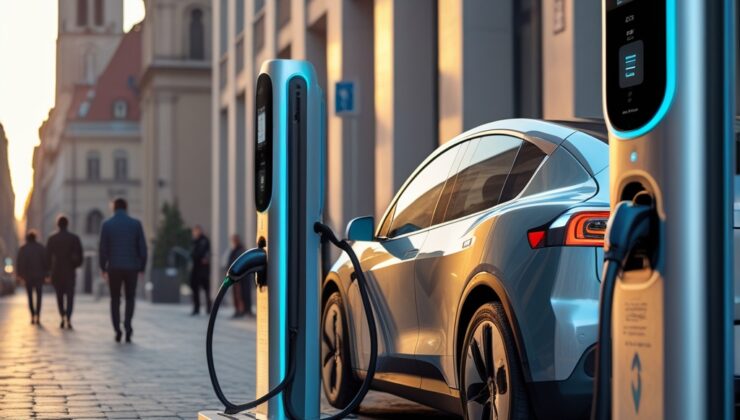
Despite robust investment, Europe’s EV network faces hurdles. The IEA reports that Europe surpassed 1 million public charging points in 2024, a 35% increase from 2023. As of September 29, 2025, public charging points exceeded 1.5 million, yet rural areas still have 50% lower charging density than urban centers, complicating long-distance travel.
Grid capacity remains a critical bottleneck, especially for clusters of high-speed chargers. Many projects require transformer upgrades or grid expansion, impacting financing through “grid upgrade escrow” or cost-sharing agreements. In response, the European Commission launched a Smart Grid Integration pilot in 2025, funding AI-based load balancing and storage solutions along TEN-T corridors to alleviate grid constraints.
Analysts stress efficient utilization: overcapacity raises operational costs, while underutilized stations struggle with profitability.
Policy Risk and Long-Term Sustainability
EU subsidies, though vital, are not permanent. Sensitivity analyses model three scenarios: continued subsidies (base case), tapering support, and subsidy-free market conditions. While AFIR sets binding minimum standards, national implementation and budget cycles are key determinants of long-term investment security.
Other risks include technology incompatibility between proprietary and open standards, unfulfilled utilization forecasts, and competitive pressure from new CPO entrants. Addressing these risks requires strong collaboration between public authorities and private investors.
Outlook and Strategic Implications
Meeting Europe’s 2030 target of 3.5 million public charging points requires €75–85 billion in cumulative investment. A blend of EU funding, private capital, and strategic alliances is essential. The Spark initiative, uniting Atlante, Ionity, Fastned, and Electra, plans to deploy 11,000 charging points across 25 countries, with projections rising to 15,000 by year-end. This rapid expansion is driving sector consolidation, with smaller CPOs either merging with larger operators or forming partnerships to maintain market share.
Experts highlight that harmonized policy frameworks, optimized grid integration, and interoperable technology deployment are crucial for scalable and profitable EV Charging Infrastructure. These strategies not only attract private investment but also accelerate Europe’s transition to zero-emission transport. By the final quarter of 2025, Europe has strengthened its position as a global leader in EV charging infrastructure, with a regulatory and financing environment that surpasses that of China and the US in predictability and stability.
Click to follow our Instagram page: Vidyoto