
EU ETS Carbon Cost Crisis Hits Road Transport Fleet 2027

Rising EU ETS carbon costs are squeezing European road transport fleets, forcing fleet managers to seek green financing solutions to survive.
EU ETS Carbon Cost Crisis Hits Road Transport Fleet
the European Union’s Emissions Trading System (EU ETS) is putting unprecedented pressure on road transport fleets, with EU ETS carbon cost increases threatening logistics profitability. Fleet managers who fail to act now risk being caught between escalating fuel expenses and substantial compliance fines. Although the direct pricing mechanism for road transport, ETS-2, is scheduled for 2027 or possibly 2028, the financial impact of EU ETS carbon cost is already evident.
Shipping’s inclusion in the original ETS is accelerating, requiring maritime operators to surrender allowances for 70% of verified emissions. These costs are immediately passed down, driving up freight rates and overall supply chain expenses. Fuel suppliers, now under indirect ETS pressure, are embedding their carbon credit obligations into wholesale prices, creating an opaque EU ETS carbon cost in every litre of diesel purchased. Since January 2025, monitoring and reporting under ETS-2 has been mandatory, signaling that the financial risk is no longer theoretical. Analysts predict that ETS-2 could push carbon prices to €80–€120 per tonne by 2030, potentially raising diesel prices by over 20% and instantly squeezing already thin transport margins.
Supply Chain Deadlock: Carriers vs. Suppliers
The ETS crisis is creating friction across the supply chain as no party wants to shoulder rising costs. Logistics companies are rushing to insert “Carbon Surcharge” clauses into contracts, while carriers without leverage may be forced to absorb costs themselves, heightening insolvency risks. Small and Medium-sized Enterprises (SMEs), which form the backbone of European road transport, are particularly vulnerable to the combined pressures of rising EU ETS carbon cost. Some fleets are using Hydrotreated Vegetable Oil (HVO) and other low-emission biofuels to reduce immediate exposure, but these measures only provide temporary relief against the inevitable cost of electrification.
EU ETS Impact on Fleet Electrification and SME Readiness
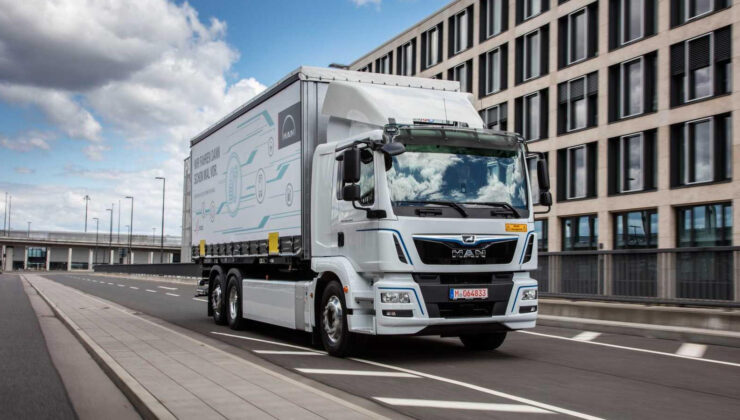
The rising EU ETS carbon cost is accelerating discussions around fleet electrification across Europe. Many large logistics operators are now evaluating total cost of ownership scenarios, comparing diesel fleets burdened by carbon premiums with electric alternatives benefiting from government incentives and lower operational expenses. Early adopters of electric light and heavy-duty vehicles are already reporting reductions in long-term operating costs, demonstrating that proactive investment in zero-emission technology can offset rising ETS-2 liabilities.
Small and Medium-sized Enterprises (SMEs), however, face unique challenges. Limited access to capital and infrastructure often delays the transition to electric fleets, leaving smaller carriers more exposed to indirect carbon costs. Industry observers warn that without targeted support, these SMEs may struggle to remain competitive, potentially leading to market consolidation in favor of larger players.
To mitigate these risks, financial institutions and public programs are increasingly offering specialized leasing options, green loans, and low-interest financing specifically for fleet electrification. Initiatives such as grants for charging infrastructure installation and subsidies for electric vehicle procurement are critical to enabling smaller operators to reduce their carbon footprint while maintaining operational viability.
Experts highlight that aligning fleet strategies with EU ETS obligations is no longer optional: proactive decarbonization, supported by green financing, is essential to surviving in a market where EU ETS carbon costs continue to rise rapidly and unpredictably.
Financial Survival: Hedge or Pay
Proactive management of carbon risk has become non-negotiable for large B2B fleets. Since May 2025, major exchanges including ICE and EEX have launched ETS-2 futures contracts, enabling fleet managers to lock in predictable EU ETS carbon cost and turn extreme financial risk into a manageable fixed expense. European countries are also offering accelerated depreciation and tax incentives for electric heavy-duty vehicles and charging infrastructure, often offsetting the initial premium of EV assets. When carbon costs are fully factored in, diesel fleets quickly become more expensive than zero-emission electric alternatives due to high taxes and maintenance expenses.
Green Capital Lifeline
The EU is channeling substantial funds into green transition financing to support fleets facing ETS pressures. In March 2025, the European Investment Bank (EIB) approved major green loan tranches, including €350 million specifically for rolling out electric light commercial vehicle (eLCV) fleets in Germany, France, and the Netherlands under favorable conditions. In September 2025, the EIB also announced a €17.5 billion SME Decarbonization Fund to support smaller carriers in energy efficiency and decarbonization, providing crucial access to competitive financing to offset EU ETS carbon cost.
Conclusion
As EU ETS carbon cost continues to rise, companies delaying the transition to zero-emission fleets are effectively choosing to pay a perpetually increasing carbon tax. Leveraging the new wave of green financing has become the single most critical financial decision a fleet manager can make to ensure competitiveness and survival beyond 2027. EU ETS carbon cost is no longer a distant concern—it is a pressing financial reality demanding immediate action.
Click to follow our Instagram page: Vidyoto