
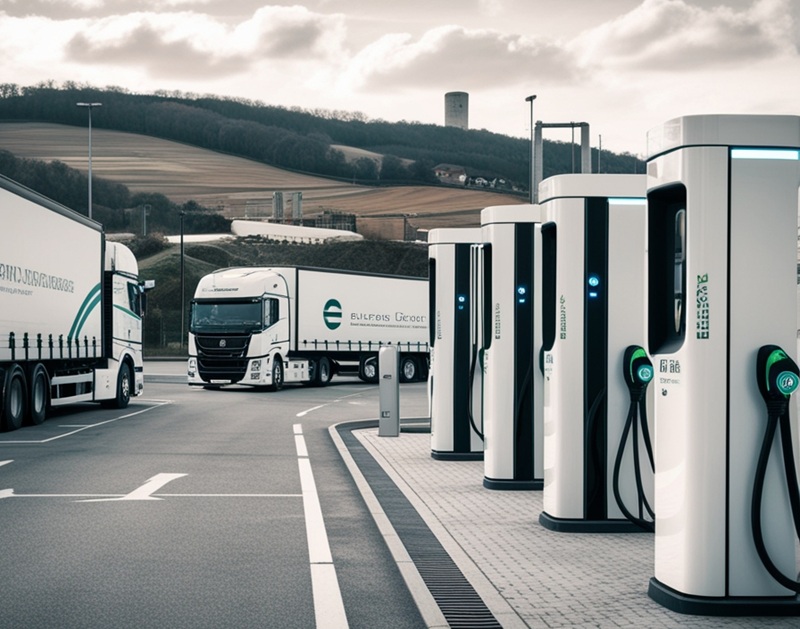
European EV Charging Infrastructure Gap 2025

European EV charging infrastructure gap ghreatens to cripple logistics and undermine EU ETS goals.
European EV Charging Infrastructure Gap 2025
The path to zero-emission freight transport across Europe is facing a critical obstacle that risks severely complicating fleet managers’ operational strategies: a pervasive European EV Charging Infrastructure Gap. While the EU’s Emissions Trading System (ETS) is successfully driving the transition away from high-carbon diesel, the physical infrastructure required to support the electric truck revolution is alarmingly behind schedule.
This shortage is quickly shifting from an environmental concern to a direct financial risk, severely impacting Total Cost of Ownership (TCO) scenarios for B2B logistics operators. Currently, more than 300,000 public and private charge points will be required across the continent for medium- and heavy-duty trucks by 2030, yet today, there are only about 10,000 charge points available, creating a massive chasm between ambition and reality.
THE FINANCIAL STRAIN OF REGULATORY SHORTFALL
The financial implications of this gap are immediate and severe. Creating the new infrastructure will require approximately €40 billion of capital investment until 2040, with €7 billion needed by 2030 alone; however, less than a quarter of this investment has been publicly committed to date. This creates uncertainty and delays financing decisions across the supply chain.
Furthermore, gaining access to the necessary energy is a challenge, as building out robust networks of chargers will be energy-intensive, consuming 20 terawatt-hours of electricity annually by 2030—roughly 0.5 percent of Europe’s total electricity demand.
This energy demand often means securing additional capacity on an already congested grid, which is identified as a major bottleneck due to its slow expansion rate, lack of modernization, poor cooperation with distribution network operators, long waits for grid connections, and highly divergent permitting procedures at national and local level. Half of the member states are already facing delays in grid connections, with limited economic viability of vehicles and infrastructure, along with financing constraints, acting as further obstacles to the electric truck transition.
THE CORE LOGISTICS CORRIDOR CHALLENGE
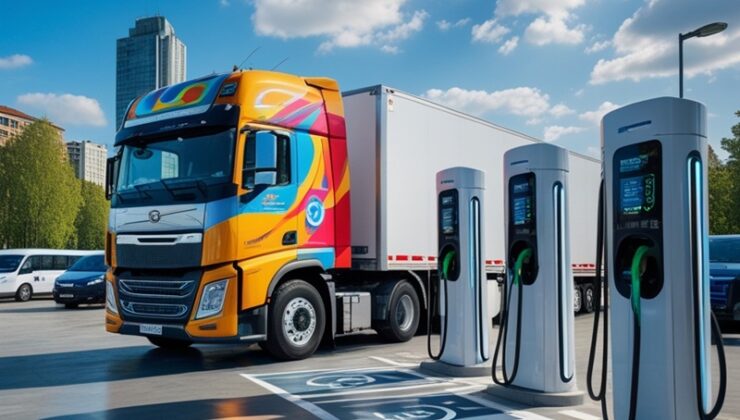
The EU’s Alternative Fuels Infrastructure Regulation (AFIR) sets mandatory national targets for infrastructure deployment, which member states consider to be the minimum level of expansion, but they see an urgent need for additional capacity. Specifically, AFIR mandates distance-based targets for heavy-duty road vehicles on the TEN-T core and comprehensive networks, requiring fast-charging hubs with a minimum of 350 kW charging equipment every 60 to 100 kilometers along major transportation routes.
The recently approved European Clean Transportation Corridor plan, which includes major axes like the North Sea–Baltic route and the Scandinavian–Mediterranean corridor (passing through key German cities like Hamburg, Frankfurt, and Munich), aims to jointly develop these corridors and fast track grid reinforcement under the Renewable Energy Directive.
However, the reality of the European EV Charging Infrastructure Gap means that ensuring seamless, cross-border, zero-emission freight transport along the TEN-T core network by 2030 requires treating charging infrastructure as a strategic priority, linked with energy policy, by the nine signatory EU states. The next step for the committed states is to agree on a package of measures by March 2026.
CREATIVE SOLUTIONS AND THE SCALE OF THE PROBLEM
While the heavy-duty sector grapples with the 350 kW and future Megawatt charging (MCS) requirements, the scale of the light-duty European EV Charging Infrastructure Gap in urban environments highlights the challenge facing all zero-emission mobility.
In large cities where residents of apartments and condos cannot install personal charging stations, creative solutions are emerging. The Czechian capital of Prague, for instance, announced a plan to install 6,000 new charging points by 2030, with 1,500 of those—at a cost of almost 500 million Czech Koruna (about $24 million)—to be converted from existing lampposts by the end of 2026.
Similarly, New York City hopes to have 10,000 curbside stations installed by 2030, five years before its state’s ban on internal combustion engine vehicles takes effect. The deputy mayor for transport in Prague noted that without accessible charging options, electromobility will remain the privilege of a small group, underscoring the necessity of public availability.
Even in the commercial space, the crisis is evident, as a consortium of eight global automakers, including BMW and Stellantis, stepped in to build the Ionna charging network in North America, addressing that region’s own infrastructure needs. These solutions for light-duty vehicles demonstrate the intense pressure and financial investment needed across all segments to close the European EV Charging Infrastructure Gap.
FROM CARBON TAX TO INFRASTRUCTURE IMPERATIVE
The necessity of bridging the European EV Charging Infrastructure Gap is undeniable. The regulatory push from the EU ETS means fleets must electrify; however, the transition’s success hinges on a functional, reliable charging network. The commitment from the nine EU member states to tackle challenges such as lengthy planning, limited site availability, and fragmented financing represents both a joint political commitment and a strategic roadmap.
With no incumbent players fully established in the electric truck charging market, this represents a significant opportunity for companies from a variety of arenas to shape the ecosystem and seize market share. Fleet managers must now treat investment in charging assets and the search for targeted green loans as critically important as vehicle procurement itself.
Ultimately, proactive investment, rather than waiting for public grid expansion, is the only viable strategy to ensure competitiveness and avoid the compounded financial costs of rising carbon taxes and operational inefficiency caused by the European EV Charging Infrastructure Gap.
Click to follow our Instagram page: Vidyoto