China’s EV Oversupply Forces Europe Push Despite Tariffs in 2025

China’s EV oversupply is driving automakers into Europe, intensifying competition and trade tensions.
China’s EV Oversupply Forces Europe Push Despite Tariffs in 2025
Chinese automakers are rapidly expanding their presence across Europe, betting on competitive pricing and increasingly advanced technology to challenge a market traditionally dominated by established European and American brands. This expansion has been marked by significant growth, with firms like BYD seeing their European Union market share increase from 0.4% in July 2024 to 1.1% in July 2025. Furthermore, BYD unit sales jumped by 251.3% in the first half of 2025, even as overall EU new car registrations slightly decreased by 0.7% in the same period. This aggressive push, however, has ignited trade tensions, leading Brussels to impose protective import tariffs.
The current tariff structure mandates that Chinese manufacturers pay an additional duty on top of the standard 10% rate. BYD currently faces a 17% additional tariff, while others like Geely pay 18.8%. SAIC, which sold 176,415 units in Europe between January and July 2025 (representing 2.1% of the EU, EFTA, and UK market via its MG brand), faces the steepest additional tariff at 35.3%. Despite these hurdles, Maria Grazia Davino, Senior Vice President at BYD Europe, emphasized the company’s commitment, stating, “We have superior technology and the product to play the game,” confirming their readiness to compete.
To strengthen its presence and mitigate tariffs, BYD is establishing a manufacturing plant in Hungary, set to begin production of the Dolphin Surf by the end of 2025, aiming to locally produce all its electric vehicles for the continent by 2028. Other firms are following suit: Changan is considering locations for a European factory, and XPENG has partnered with Magna to assemble models in Austria.
The Root Cause: China’s EV Oversupply Crisis
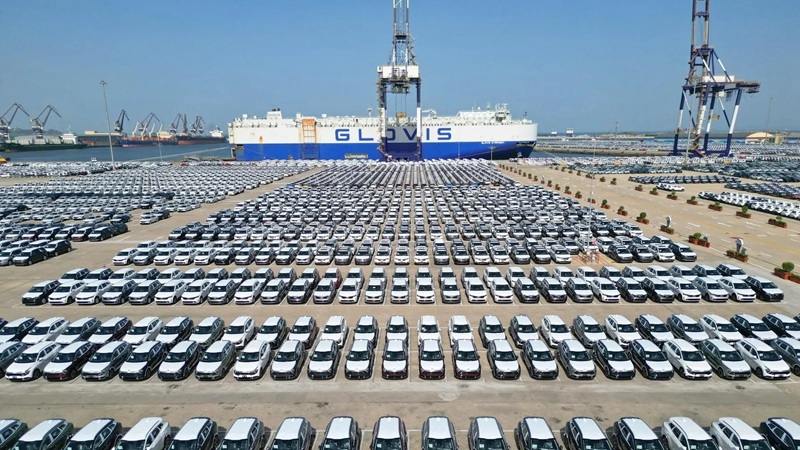
The aggressive push into Europe is driven, in part, by a severe market imbalance at home. China has too many cars, a direct result of years of government subsidies and policies aimed at making the country a global automotive power. This strategy has resulted in domestic automakers producing more vehicles than the world’s biggest car market can absorb, influenced more by production targets than by consumer demand. This environment has resulted in a crippling price war, now in its third year, where profits are nearly impossible for almost all automakers. The issue of China’s EV oversupply is particularly acute, with Chinese automakers possessing factory capacity to produce twice the 27.5 million cars they manufactured last year.
This massive China’s EV oversupply has triggered unusual practices. Unwanted new vehicles are being dumped onto gray-market traders like Zcar, where locally made Audis are sold at a 50% discount and some Chinese SUVs sell for more than 60% below sticker price. Furthermore, dealers sometimes register and insure unsold cars in bulk to meet sales targets, a move that allows them to collect factory rebates while pushing zero-mileage vehicles into the ‘used’ car market or into exports.
This cyclical, self-destructive competition is referred to by industry players as “involution.” Experts warn that this growing China’s EV oversupply points to a potential market shakeout, mirroring turmoil seen previously in China’s property and solar industries, where local government interests in employment and tax revenue often prioritize production volumes over profitability.
Financial and Market Implications of China’s EV Oversupply
The brewing crisis stemming from China’s EV oversupply has larger implications for the nation’s economy, where the auto industry comprises about one-tenth of GDP. The intense pressure to hit targets, rather than focus on profitability, is forcing manufacturers to “keep pedaling,” even at deep losses, just to ensure cash flow, as one executive noted.
This problem of China’s EV oversupply is systemic, rooted in local governments offering cheap land and subsidies in exchange for production commitments, as seen with BYD’s land acquisition in Changfeng county. For instance, the county’s economic growth significantly outpaced the national rate after BYD established a mega-factory there, highlighting the political pressure to maintain production volumes despite China’s EV oversupply.
This domestic turmoil is accelerating the competitive pressure felt globally. Overseas governments, particularly in Europe, worry that the influx of cheap Chinese-made vehicles fueled by this China’s EV oversupply will ruin their domestic industries. Meanwhile, the competition within the Chinese sector remains fierce: consultancies predict that only 15 of the 129 EV and hybrid brands in China will be financially viable by 2030, a challenge exacerbated by the effects of China’s EV oversupply. Major players like Geely are targeting 5 million annual sales by 2027 to survive, while industry leader BYD, despite an initial slowdown in quarterly profit, remains a dominant force, outselling Tesla in Europe for the first time in April 2025.
The Hybrid Bridge and Future Competition
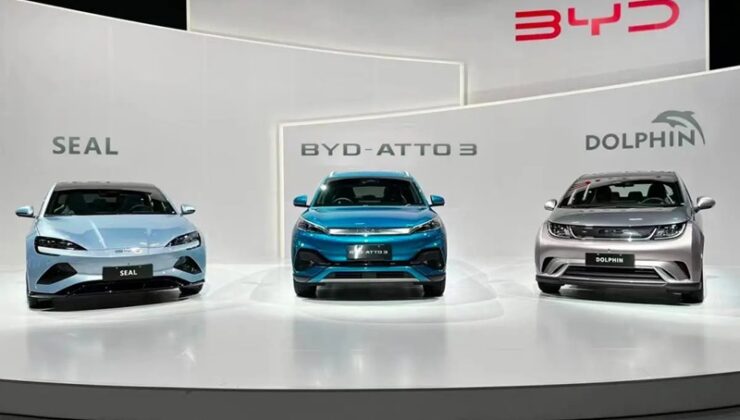
The high sales of Chinese EVs in Europe occur despite France recently introducing incentives to favor EVs assembled in Europe with local batteries, making the competition even tougher. Davino stated that BYD will continue to compete by being better and finding alternatives. Looking at powertrain trends, hybrids remain the most popular vehicle type in Europe, accounting for 34.8% of new car registrations in the first half of 2025.
Hybrids offer a “convenient alternative,” particularly due to extended range; for example, BYD’s new Seal 6 DM-i Touring model boasts a 1,350-kilometre range, eliminating range anxiety for consumers. However, as technology improves and the effects of China’s EV oversupply continue to be felt globally, the future balance between full electrics and hybrids is uncertain, emphasizing that consumer choice will ultimately dictate the path of the industry. The combined pressure from China’s EV oversupply at home and new tariffs in Europe means Chinese manufacturers must focus keenly on local production and superior technology to maintain their current momentum.
Click to follow our Instagram page: Vidyoto